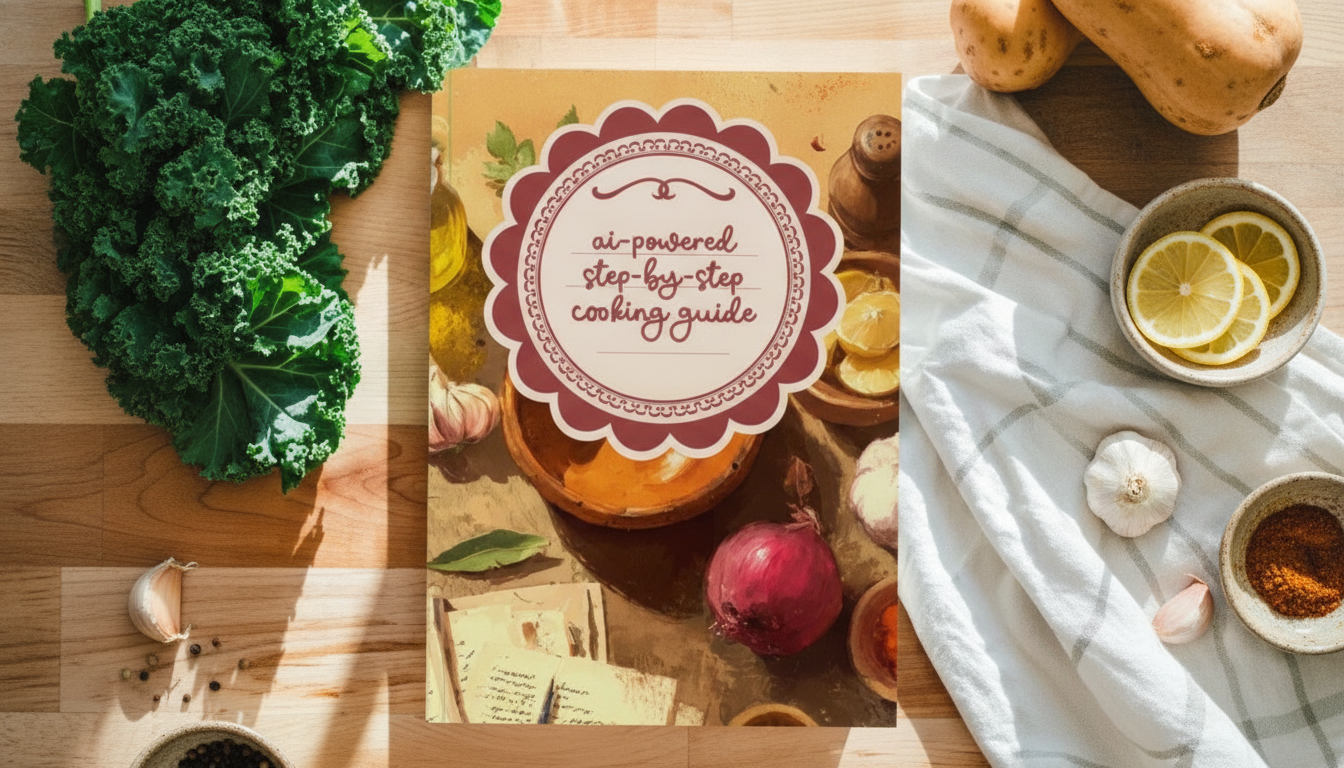
Cooking gets easier when each recipe is broken into clear, confidence-building steps—especially on busy nights or when experimenting with new flavors. An AI-powered, step-by-step format turns “What should I make?” into a practical sequence you can actually follow: what to prep first, when to heat the pan, what “done” looks like, and how to recover if something goes sideways. As a digital download, it’s also easy to keep nearby during meal planning and while you cook, so you’re not bouncing between scattered notes and half-remembered tips.
If you want a flexible structure that supports fast weeknight dinners, consistent meal prep, and more creative “use what’s in the fridge” cooking, an AI-guided step system is built for that rhythm.
When the method is clear, it’s easier to focus on fundamentals like heat control and timing. For safety-sensitive steps (especially proteins), it also helps to anchor your cooking decisions to reliable guidance like the USDA safe minimum internal temperature chart.
A step-by-step guide is most useful when it matches how people cook on real days—not just ideal ones. Instead of starting with a perfect recipe, start with the goal and constraints, then follow the staged sequence like a checklist.
| Scenario | Best approach | What the step-by-step format emphasizes |
|---|---|---|
| 15–25 minute weeknight meal | One-pan or one-pot method with minimal prep | Sequencing (what goes in first), heat control, and quick doneness checks |
| Meal prep for 3–5 days | Batch-cook grains + protein + vegetables, mix-and-match sauces | Food safety temps, cooling/storage steps, and reheating guidance |
| Using leftovers creatively | Transform base ingredients into a new format (wrap, bowl, soup, stir-fry) | Flavor building order (aromatics → spices → liquid → finish) and texture fixes |
| Trying a new cuisine | Keep technique simple; swap flavors gradually | Core method + optional variations so the first attempt stays low-risk |
Many cooking “failures” come down to a few predictable slip-ups: timing, heat, and seasoning. A structured, staged approach prevents those problems by making the invisible parts of cooking visible.
A good plan shouldn’t feel like a cage. The simplest way to keep variety while reducing effort is to plan around repeatable “templates,” then vary the flavor profile. For a science-based baseline on building balanced meals, the Harvard T.H. Chan School of Public Health Nutrition Source is a helpful reference.
The AI-Powered Step-by-Step Cooking Guide (Digital Download) is designed for clarity at the exact moment cooking gets chaotic: mid-prep and mid-pan. Each stage emphasizes what to do, what to look for, and what to do next, so you can keep moving without second-guessing.
For prep and beverages (or even quick cold infusions, diluting sauces, and measuring water for grains), the High borosilicate glass cold water kettle for beverages and prep is a practical countertop companion—easy to reach for during the “set up your station” phase.
It breaks the process into small stages with clear actions, so there are fewer hidden assumptions. Doneness cues (color, texture, bubbling) reduce guessing, and simple recovery steps help fix common mistakes before they ruin the meal.
Yes—by choosing constraints first (dietary needs, time, tools, servings), you can follow steps that still work even when ingredients change. Swaps and scaling are easier when the method stays consistent and only the components vary.
Plan around a few repeatable templates, then use overlapping ingredients and 2–3 core sauces to keep variety high. Note intentional leftovers plus storage and reheating details so the next meals feel automatic instead of improvised.









Leave a comment