Most cooking waste comes from a few repeat offenders: food scraps you could use, packaging you didn’t need, and leftovers that get forgotten. The fastest way to cut waste is to tackle what’s happening on the cutting board and in the fridge—right when you cook.
Peels, stems, and herb stalks add up fast. Reduce this waste by trimming less aggressively and saving clean scraps for stock. Keep a freezer bag for onion skins, carrot ends, celery leaves, and herb stems; when it’s full, simmer with water and salt for a quick broth.
Cooking waste often starts days earlier when ingredients get buried. Put a “use-first” bin or shelf in the fridge for items nearing their end. Before you start cooking, shop your fridge: plan the meal around what must be used today (soft greens, herbs, cooked grains, half a sauce jar).
Burnt rice, dried-out chicken, and too much pasta become trash. Measure staples (rice, pasta) and cook in smaller batches when possible. If leftovers are unavoidable, portion them into shallow containers so they cool quickly and stay safe—and so they’re easy to grab for lunch.
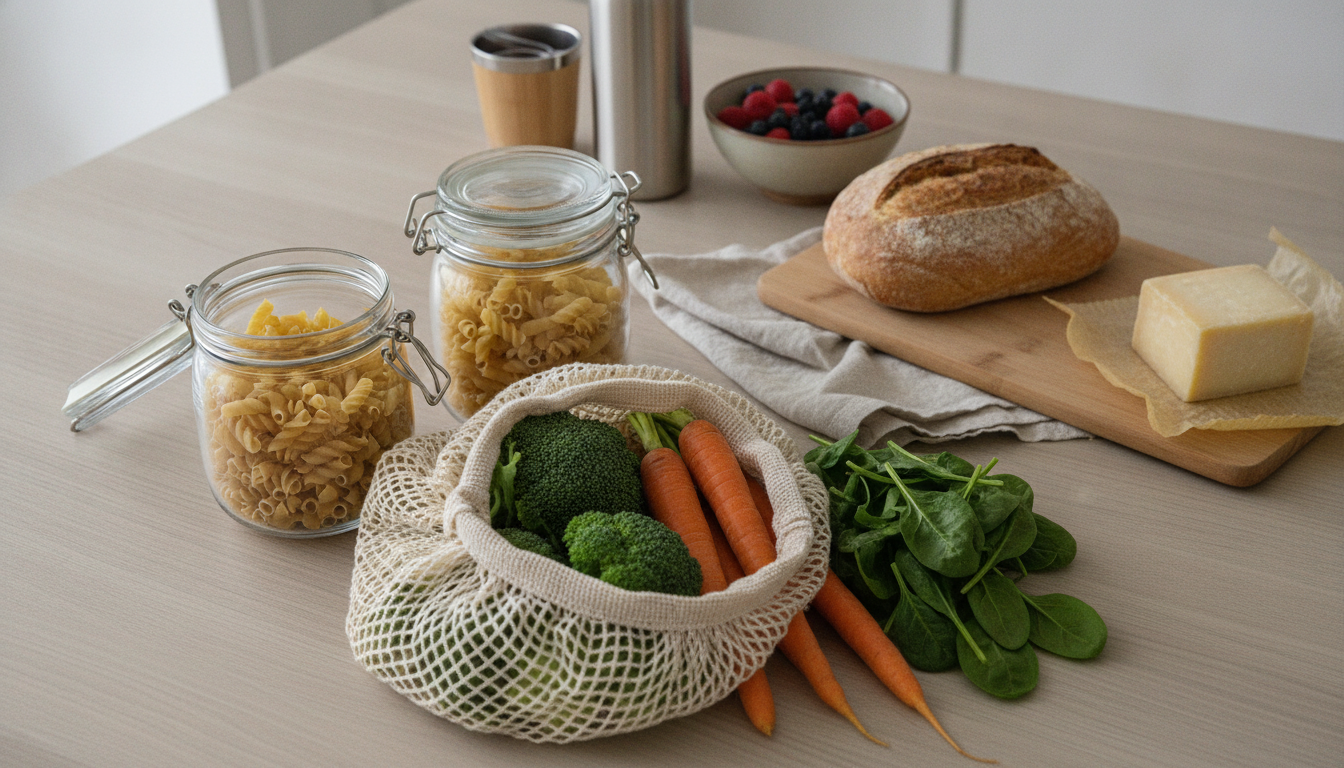
Paper towels, plastic wrap, parchment, and disposable sponges create constant waste. Swap in quick wins: washable dishcloths, silicone lids or reusable wraps, and a compostable scrub brush with replaceable heads.
Buying small quantities (like a single lemon in a clamshell or pre-cut produce) increases packaging waste. Keep a short “always-have” list—garlic, lemons, onions, and a few pantry staples—so you can buy less packaged options when you shop.
For a deeper, step-by-step approach—from planning and storage to smarter shopping—see the full guide here: zero-waste kitchen habits.
Replace paper towels with a small stack of washable cloths and keep them within arm’s reach. It’s a daily-use change that reduces trash immediately without changing how you cook.











Leave a comment