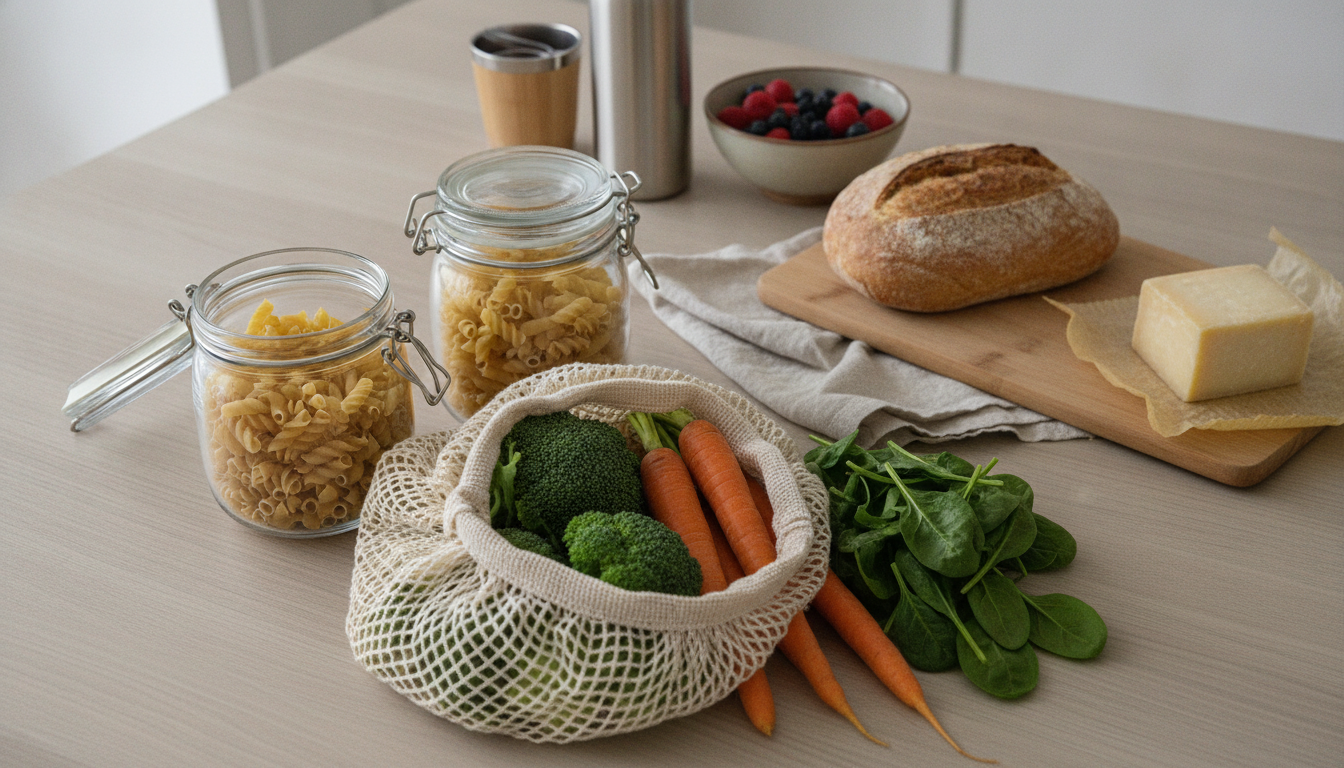
Strictly speaking, no food is perfectly “zero waste” from farm to fork—growing, harvesting, and transporting all use resources. But at home, many foods can be effectively zero waste because you can use every part, store them with minimal packaging, and compost the rest. The best “zero-waste foods” are the ones that fit your routine, don’t spoil before you eat them, and come with reusable or no packaging.
Whole vegetables with edible tops and peels (carrots with greens, beets, broccoli stems, potatoes). Cook leaves into pesto, roast stems, and simmer peels and trimmings into stock. Any unusable scraps can go to compost.
Whole fruits (apples, citrus, melons). Zest citrus, candy peels, or infuse vinegar with scraps for a low-waste cleaner. Cores and rinds can be composted when they’re not useful in the kitchen.
Dry goods from bulk bins (rice, beans, lentils, oats, flour, pasta, nuts, spices). These are easy to buy in your own containers, store in jars, and portion so little goes stale.
Eggs and dairy in returnable containers (where available). Some creameries and local dairies offer bottle deposits, which reduces single-use packaging.
Bread and bakery items from a bakery counter. Bring a cloth bag, freeze slices you won’t eat soon, and turn stale pieces into croutons or breadcrumbs.
Zero-waste eating is mostly about habits: planning portions, storing food so it lasts, cooking “scrap-friendly” recipes, and having a compost option. For a practical approach—how to plan, shop, store, cook, and save leftovers—see this guide to zero-waste kitchen habits.
For Zero-Waste Foods: Best Picks and Low-Waste Habits, the best answer depends on fit, material, care instructions, and how the product will be used day to day.
Reuse what you already have first: jars, takeout containers, and glass bottles work well for pantry storage. Focus on planning meals and using leftovers before upgrading any storage.










Leave a comment